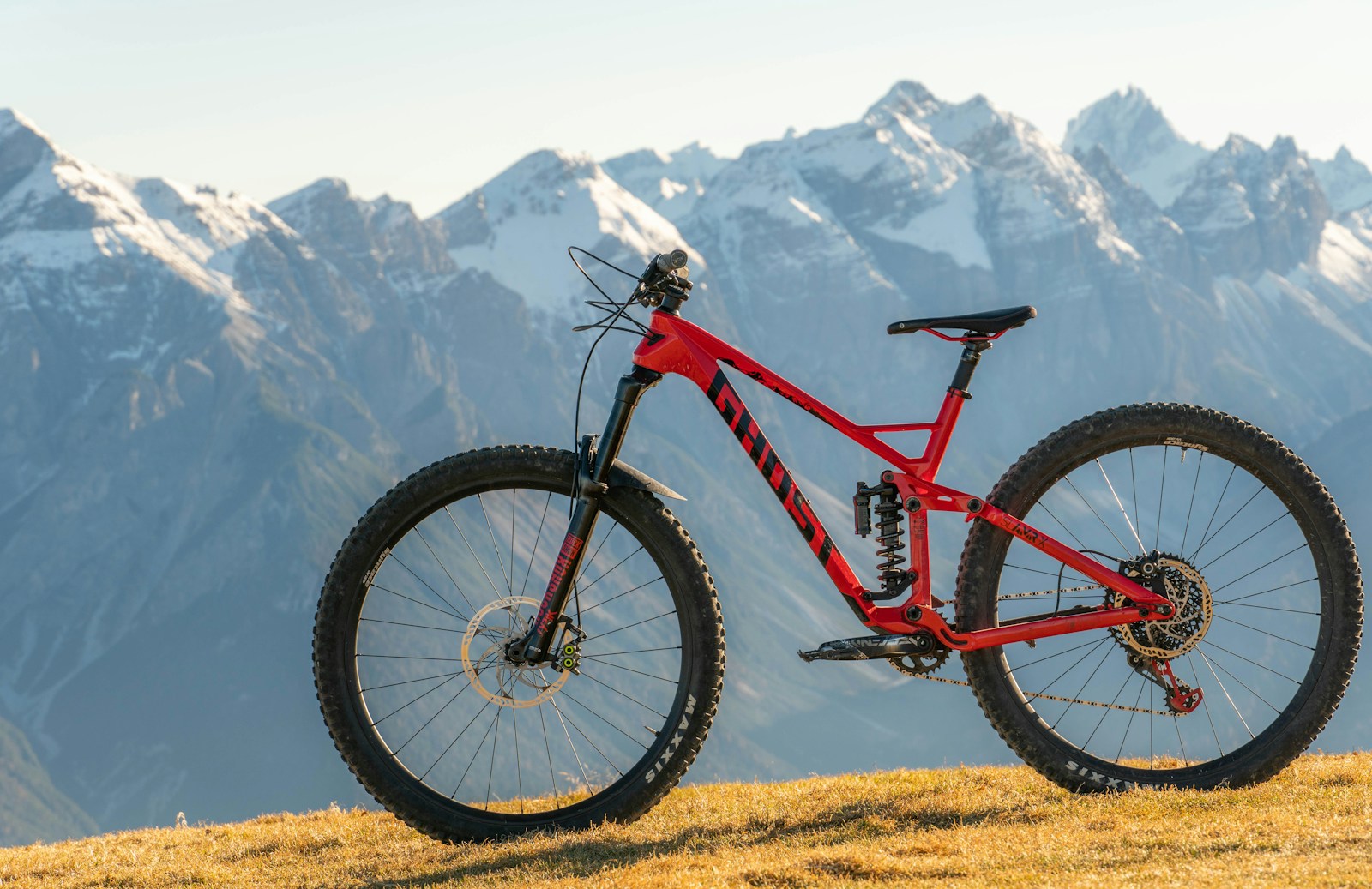
Fork service intervals are the most-skipped maintenance task in mountain biking. Riders will obsess over chain wear and pad thickness while running a fork that has not seen fresh oil in three years. The cost of skipping a service does not show up as a dramatic failure. It shows up as a slow degradation that you stop noticing because it happened gradually, and a freshly serviced fork feels so much better than yours that you forgot what good felt like.
This guide covers the official Fox and RockShox service intervals, what each service actually does inside the fork, the real cost of skipping them, and the warning signs that say you have already waited too long.
What the published intervals actually say
Fox and RockShox publish their fork service intervals in their service manuals. The numbers are roughly the same across both brands and across most modern long-travel suspension forks.
For typical 35–38 mm trail and enduro forks:
- Lower-leg service: every 50 hours of riding. This is the most-frequent service. It involves removing the lower legs from the upper assembly, cleaning and re-greasing seals, replacing foam rings, and adding fresh lower-leg oil.
- Damper service: every 100–200 hours. Fox lists 125 hours for damper bath oil refresh, 200 hours for full damper service. RockShox lists similar intervals.
- Air-spring service: every 100–200 hours. Lubricant breakdown and seal wear inside the air spring matter less for performance day to day, but matter a lot when you skip them long enough.
Fox publishes these intervals in their full-service guide on their website. RockShox does the same. These are not aspirational targets. They are the manufacturer's call for what keeps the fork performing as designed.
What each service does
Each service is targeting a specific problem.
Lower-leg service addresses:
- The seals at the top of the lower legs that ride on the stanchions. These seals trap dirt, lose grease, and start to drag as they age.
- The foam rings inside the lower legs that hold lubricant against the seals. These dry out as oil drains down and they lose their job.
- The thin bath of lower-leg oil that lubricates the bushings and the back of the seals. This oil gets contaminated and loses viscosity.
Skipping lower-leg service is what causes the most-noticeable degradation. After 100 hours, small-bump compliance is dramatically worse than after 50. The fork feels harsh at the start of travel, sticky off the top, and you notice it most on chatter.
Damper service addresses:
- The oil inside the damper itself, which controls all your compression and rebound damping.
- Damper seals that prevent oil from leaking past the piston.
- The internal floating piston (IFP) and bladder that maintain damper pressure.
Skipping damper service means damping rates drift. Rebound feels different at the start of a ride than at the end. Compression becomes inconsistent. Eventually the damper starts losing pressure and the suspension's spring rate gets contaminated by damper behavior.
Air-spring service addresses:
- The dynamic seal between positive and negative air chambers.
- Lubricant on the air-piston and chamber walls.
- The rubber and plastic parts that seal the air spring.
A neglected air spring loses pressure faster, develops stiction at the seal interface, and eventually starts to leak air between chambers, which feels like inconsistent sag from ride to ride.
What "50 hours" actually means
Fifty hours is not "every six months." It depends entirely on how much you ride.
- A weekend rider doing two 90-minute rides per week hits 50 hours every 17 weeks. So three or four lower-leg services per year.
- A daily commuter who is also riding singletrack three times a week hits 50 hours in about 8 weeks. That is six lower-leg services per year.
- A racer or shuttle-park rider can hit 50 hours in three weeks during peak season.
If you are riding regularly and you have not done a lower-leg service this year, you are overdue. If you cannot remember the last time you did one, you are very overdue.
The real cost of skipping
The cost is not "the fork breaks." It is much more subtle.
Lost performance. A fork that is 100 hours overdue on lower-leg service feels harsh and dead at the start of travel. You stop trusting it on chatter. You compensate by riding stiffer in the arms and shoulders. You think the bike feels different but cannot pin it down.
Accelerated wear on expensive parts. When seals dry out, they let dirt past. Dirt in the lower legs gets ground into bushings. Bushings wear into stanchions. Stanchion wear is irreversible. A $40 lower-leg service skipped for two years can cost you a $250 stanchion replacement.
Damper oil contamination. When the damper goes too long, breakdown products in the oil clog small ports and shim stacks. Eventually the damper starts to behave erratically. A $90 damper service skipped for three years can become a $400 full damper rebuild with replacement parts.
Resale value. A bike with documented service history sells for more. A bike with no service records and visibly tired suspension drops noticeably in private-sale value.
The math is unkind to skippers. A lower-leg service is about $40 if you take it to a shop, less if you do it yourself. Doing four a year costs $160. Skipping for two years costs $250 in stanchion wear alone, and that is the optimistic scenario.
Warning signs you are overdue
Even without a service tracker, the fork itself will tell you. Common signs:
- Visible oil on the stanchions above the seals after a ride. Some weep is normal. A wet ring around each leg is not.
- Stiction at the start of travel. Push the fork down with your hands. If it takes meaningful force to start moving, then suddenly drops, the seals are dry.
- Loss of small-bump compliance. Your bike feels harsh on chatter even though pressure and compression have not changed.
- Audible clunks or whirring during compression or rebound. Damper noise is a service signal.
- The fork feels different at the start of a ride than at the end. Cold-oil behavior should be similar to warm-oil behavior. Big changes mean degraded oil or dry seals.
Any one of these signs warrants an immediate lower-leg service. Two or more suggests the damper needs attention too. The full breakdown is in warning signs your suspension needs service.
DIY versus shop
A lower-leg service is one of the most-DIYable suspension jobs. It takes about an hour the first time, 30 minutes after you have done a few. The tools are cheap: a strap wrench, a 24 mm socket, snap-ring pliers, fresh oil and seals.
Damper service is a different category. It requires nitrogen charging for some models, specific damper-bleed procedures, and torque settings that matter. Most riders take damper service to a shop or to a Fox/RockShox certified suspension specialist.
Air-spring service is between the two in difficulty. Worth learning if you ride a lot.
The lower-leg service at home guide walks through the full procedure step by step.
How to track service hours
The simplest method: a sticky note on your stanchion with a tally mark per ride and a target hour count. Crude, effective, almost no one does it.
Better: any app that tracks your rides can also track your suspension hours. Strava is free and adds up ride duration over time. Look at total moving time, divide by 60, and you have hours roughly. A third-party app or spreadsheet can map ride hours to your fork and shock so you know when each is due.
The hardest part of suspension service is not the service itself. It is remembering when it is due. Build a tracking habit and the rest follows.
Where to go from here
If your fork is already showing service warning signs, do not wait. Read the warning signs guide to assess severity. If you want to do the lower-leg service yourself, the step-by-step at-home guide covers Fox 36/38 and RockShox Lyrik/ZEB.
If you have just had a service and the bike feels different, recheck sag and rebound. Service changes behavior slightly even when done perfectly, and a recheck closes the loop.